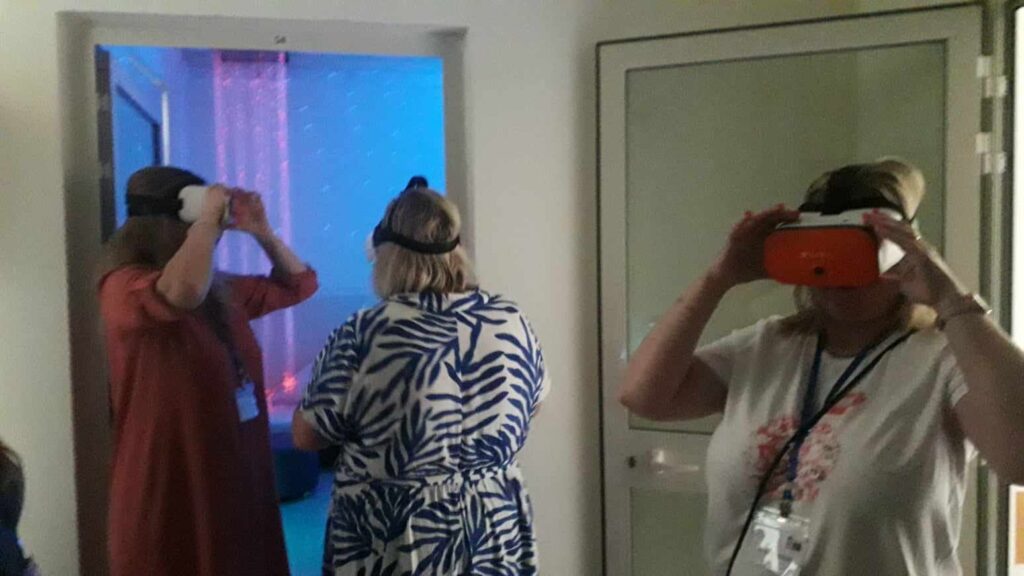
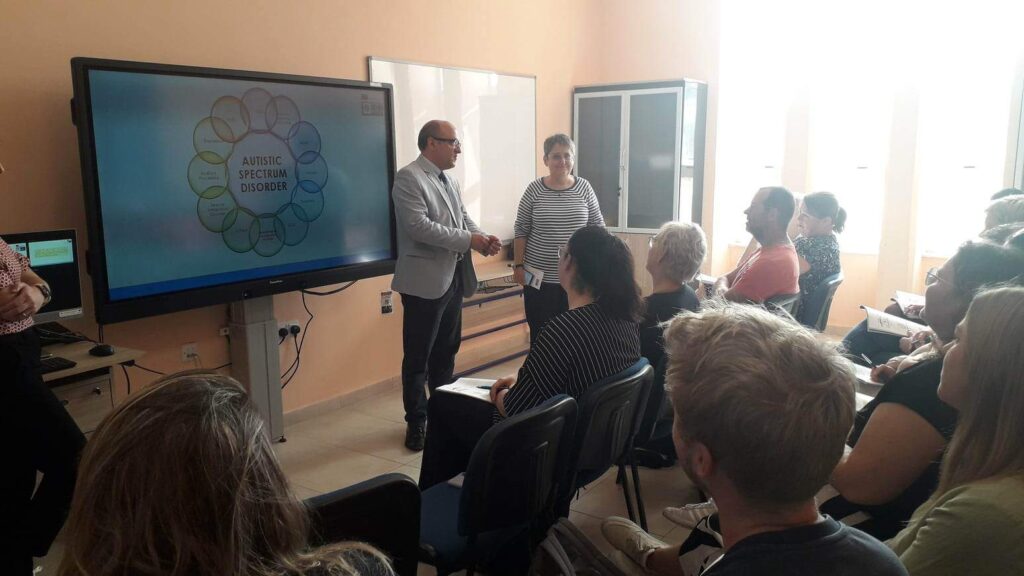
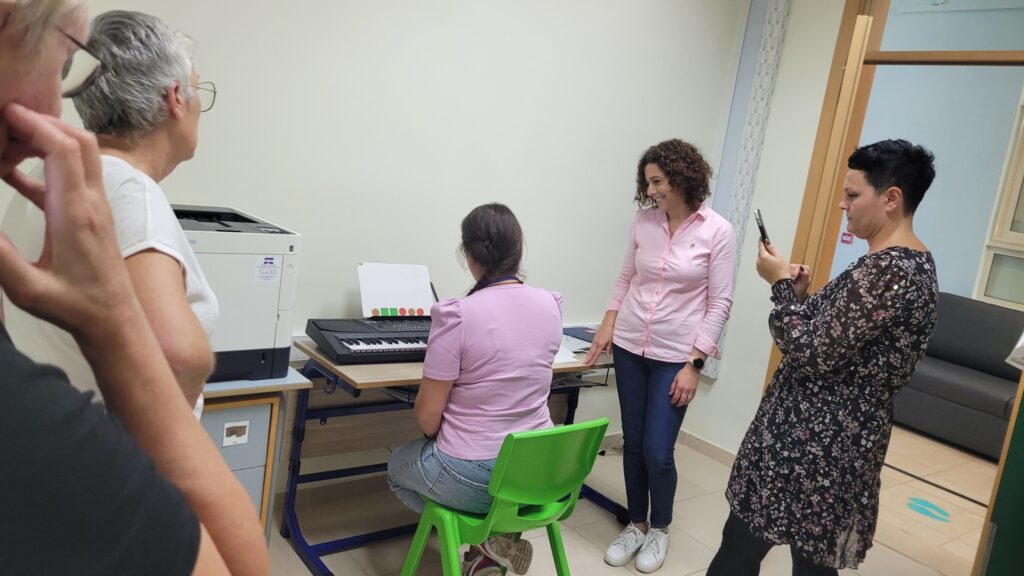
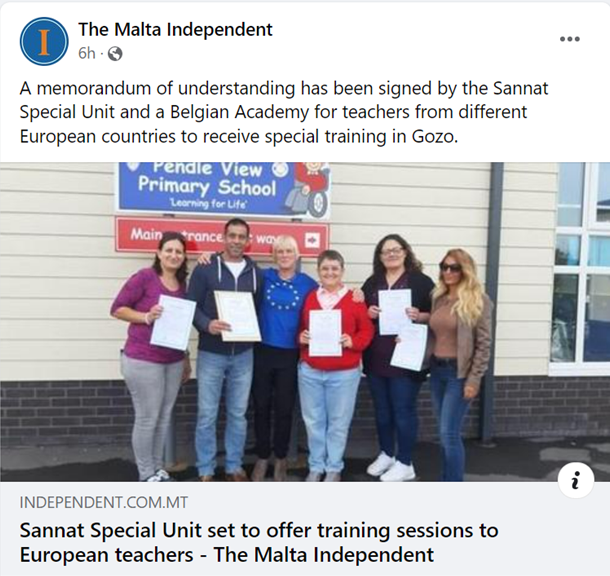
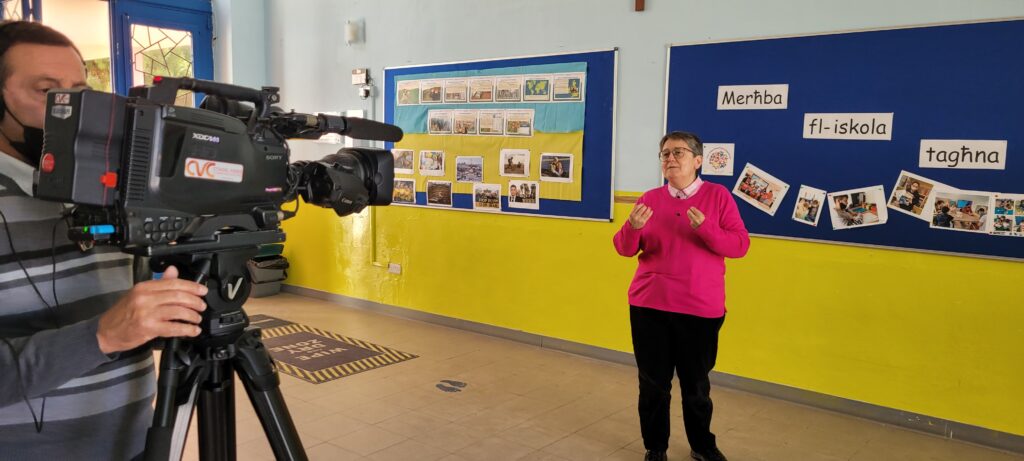
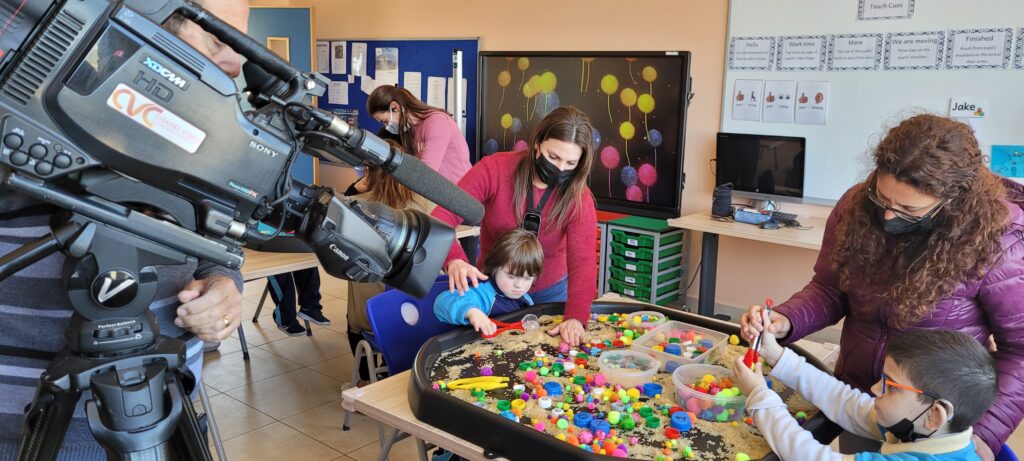
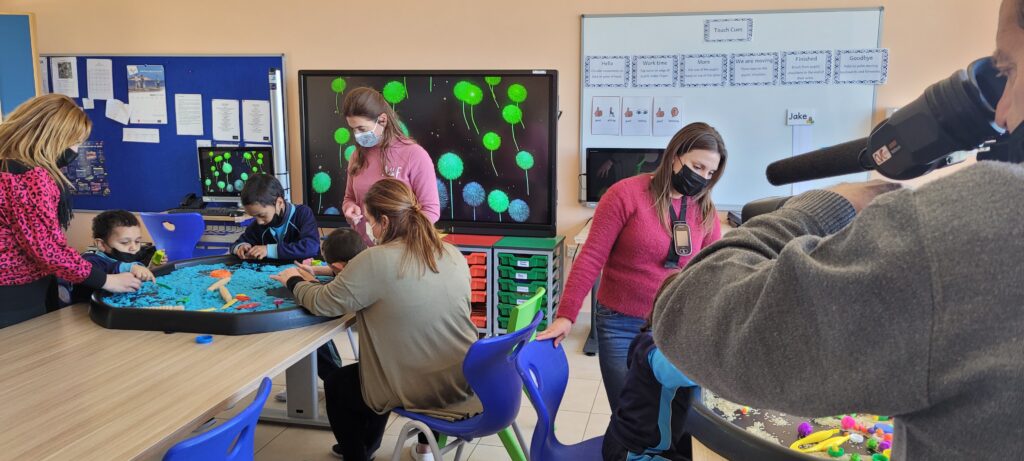
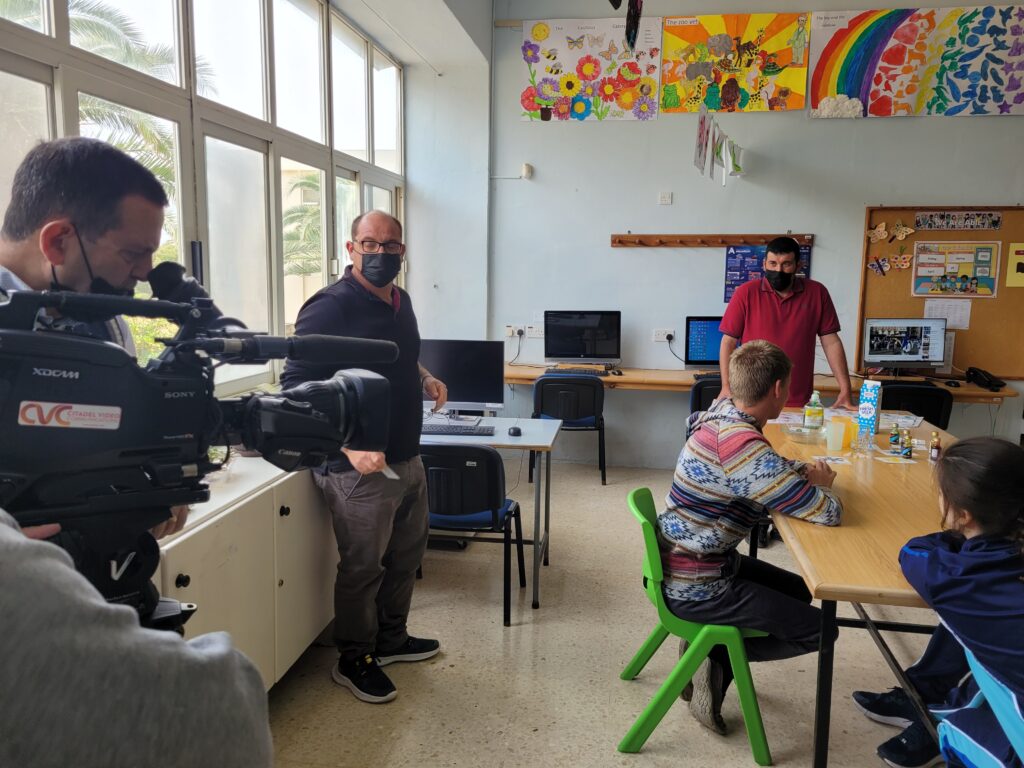
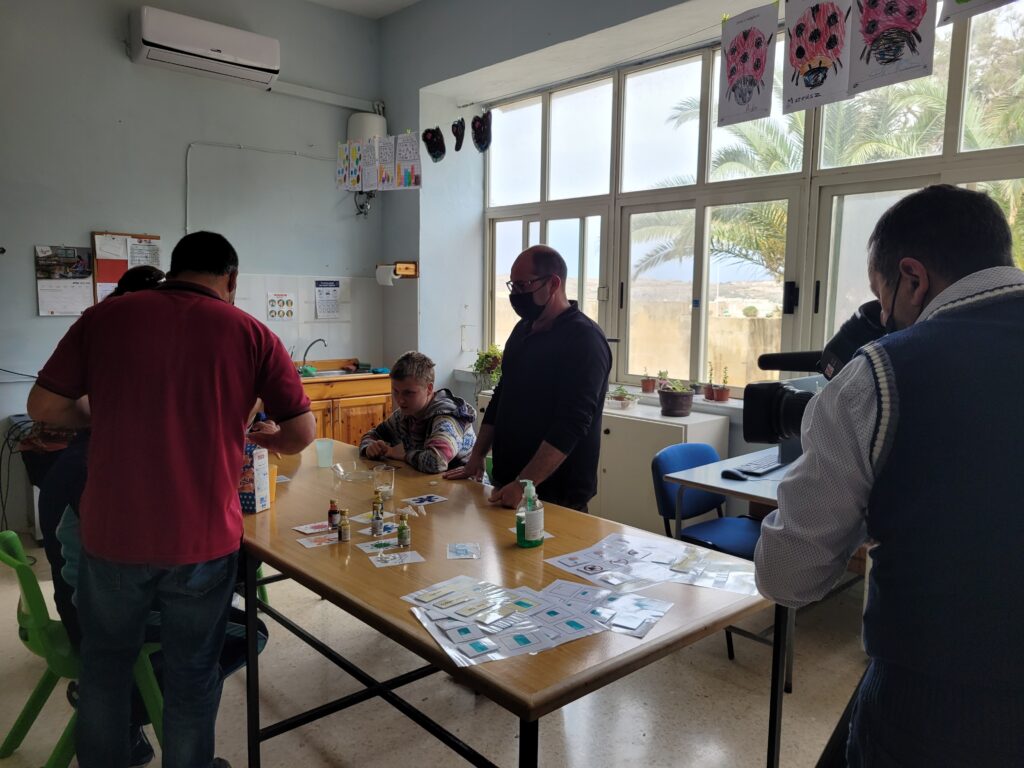
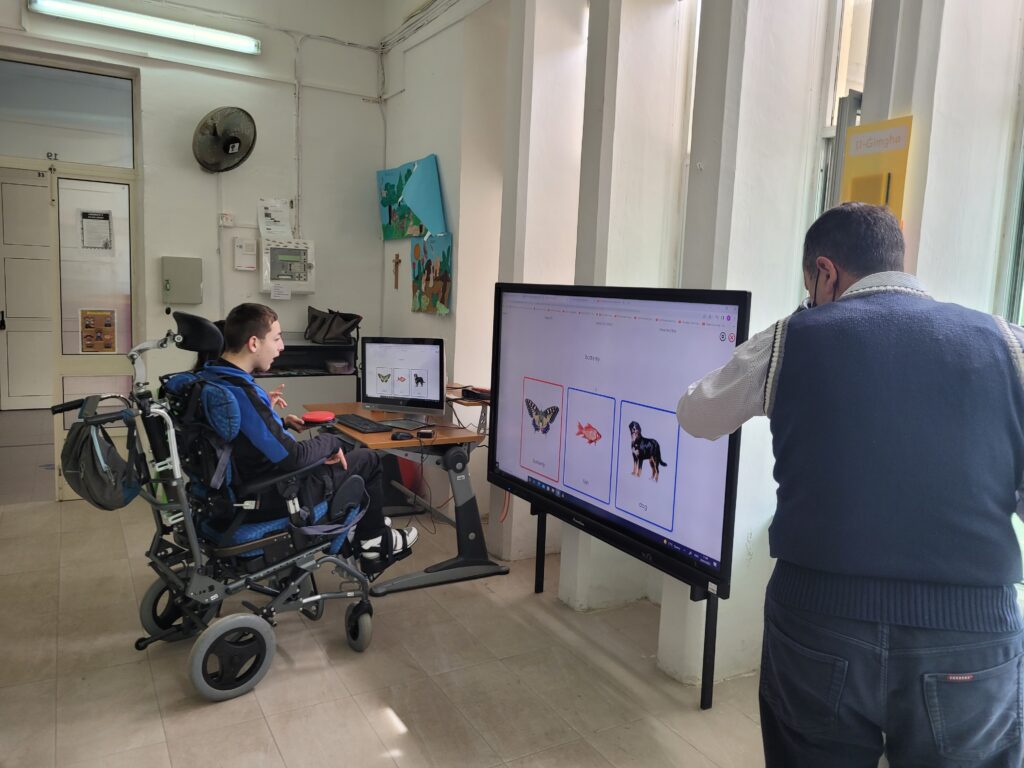
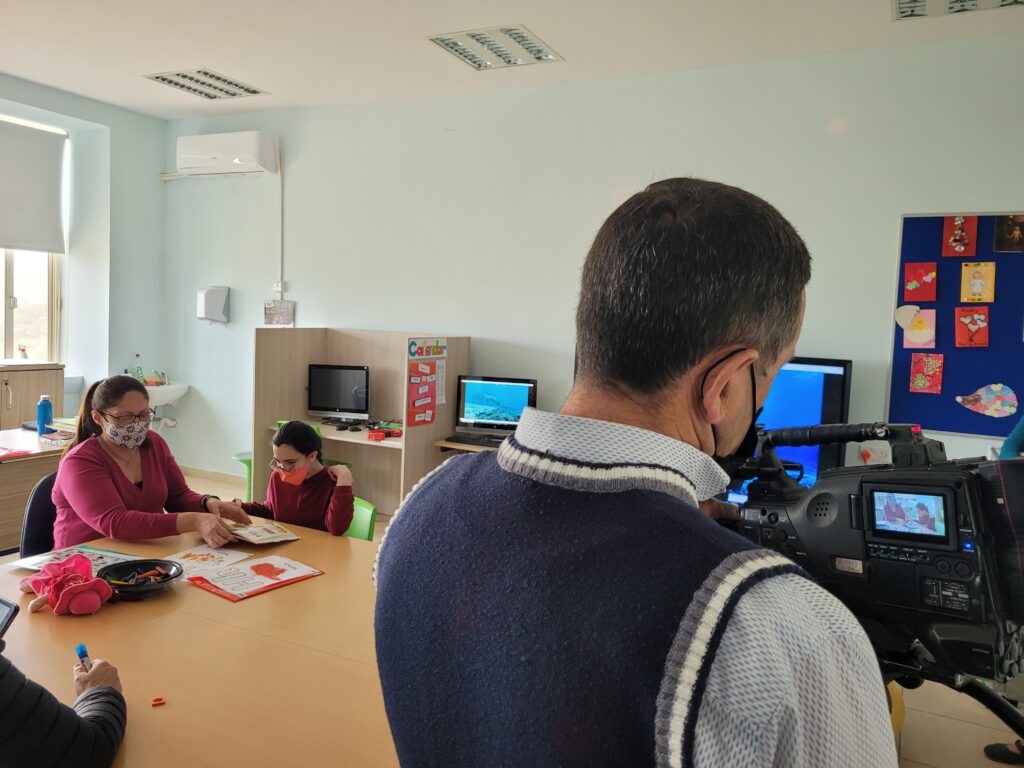
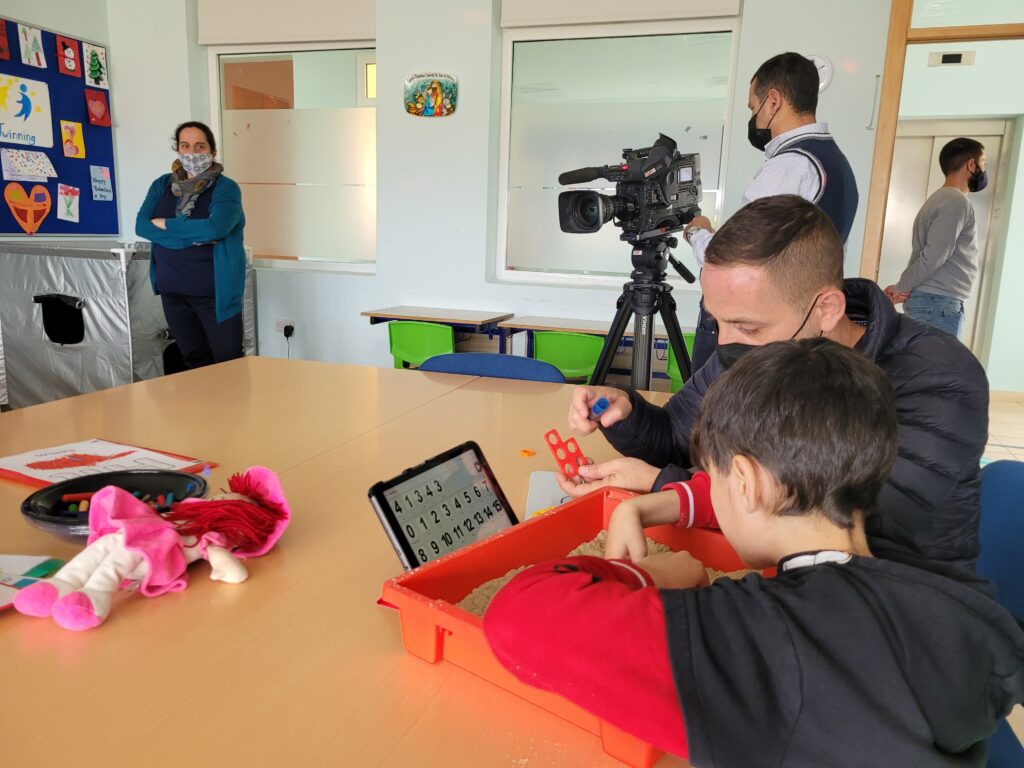
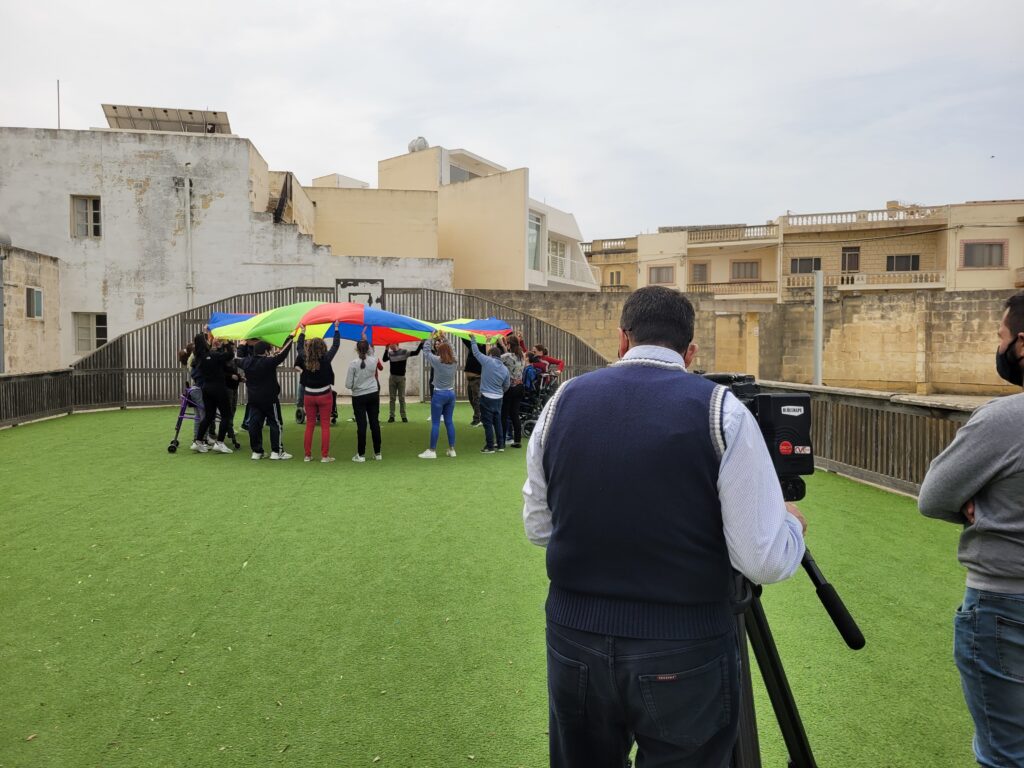
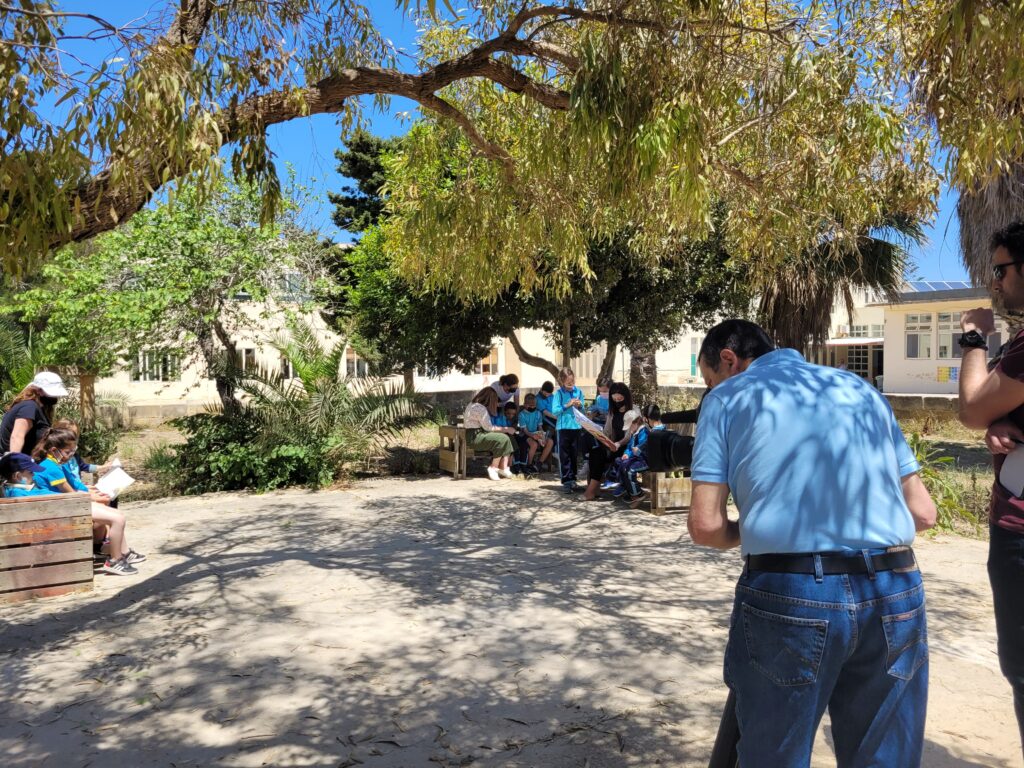
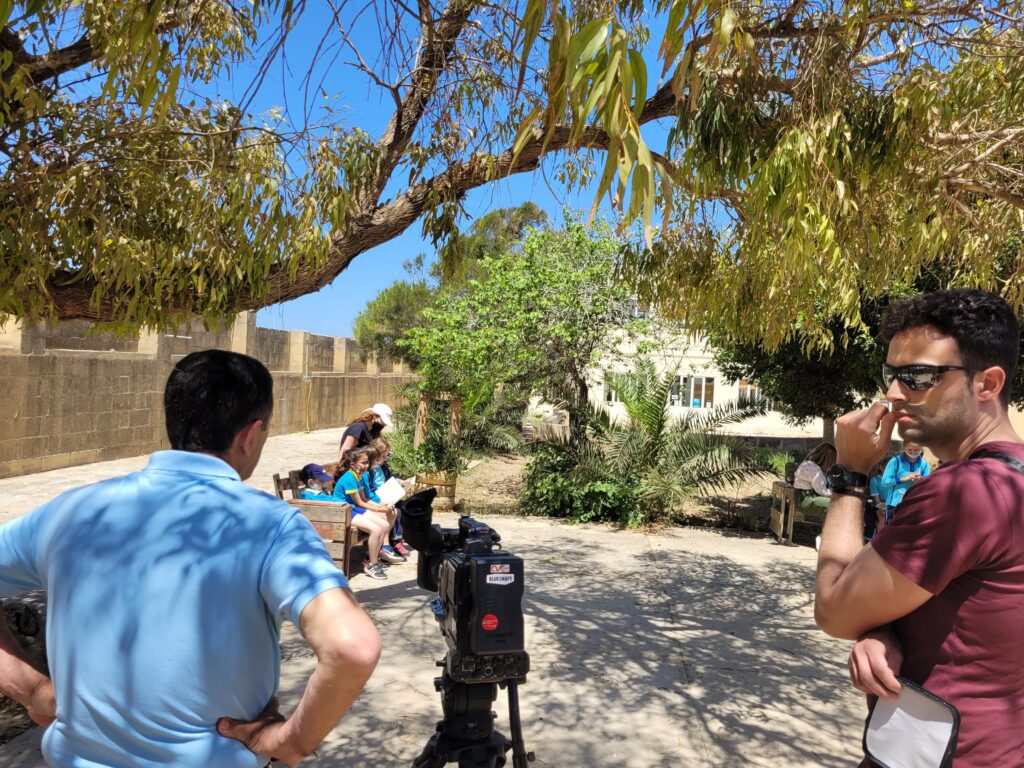
Thirteen educators from Belgium engaged in a week of training and observation sessions at our school. The Eekhout Academy organised this Erasmus+ programme, selecting our school to provide training on ‘Inclusive Education in Malta, Autism and Challenging Behaviour.’
The training and observation programme ‘Inclusive Education, Autism and Challenging Behaviour’, was held at Sannat Special Unit between the 14th and 18th November. A group of 15 educators from Belgium, Slovenia and Germany took part in this Erasmus+ programme. This was the first of its kind organised by our school.
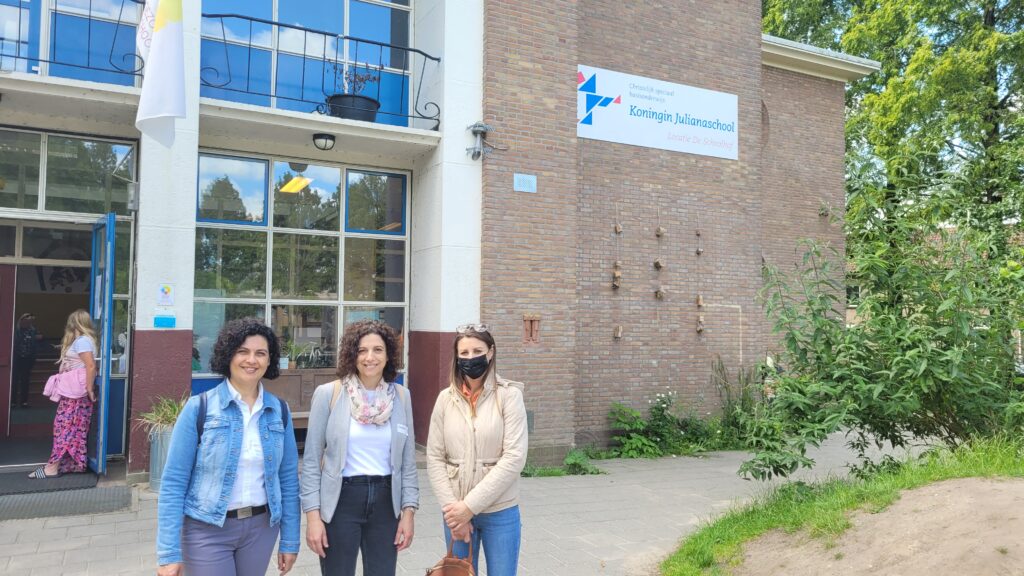
Special Unit teachers Ms Joanne Sultana, Ms Monica Barbara and Ms Simone Mangion represented our school during the last project meetings held in the Netherlands as part of the ETE (Europeans Together for Earth) Erasmus+ project.
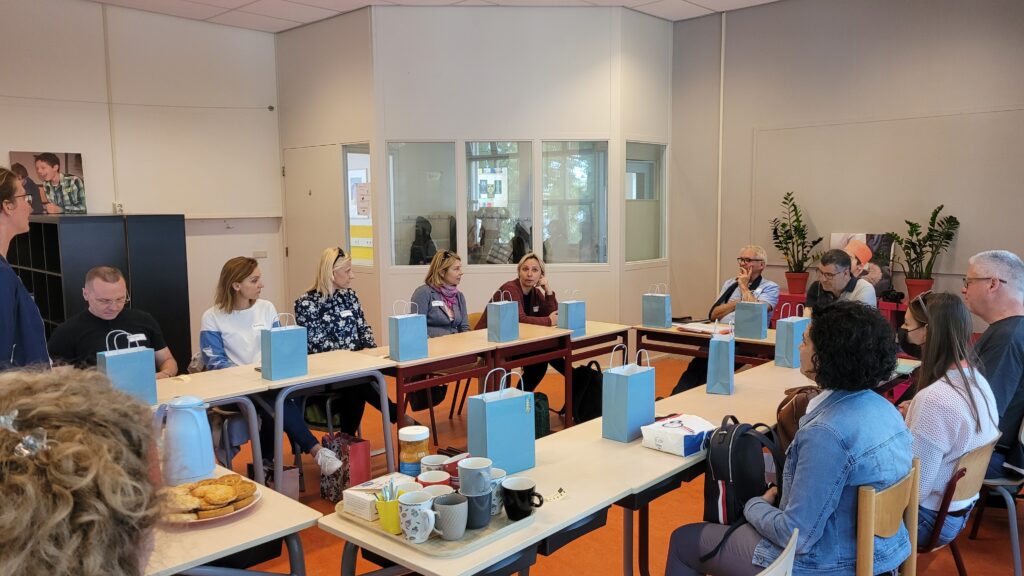
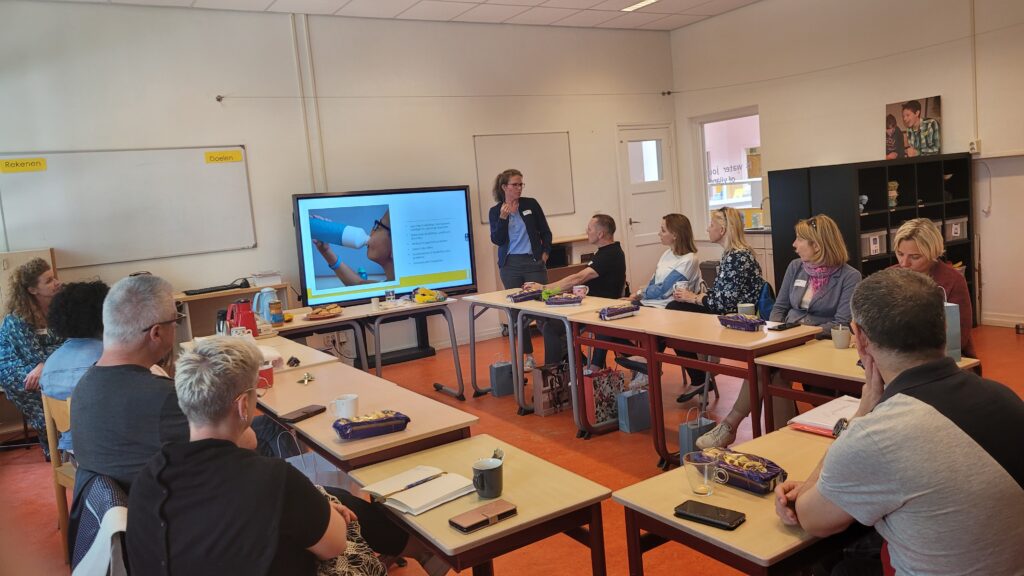
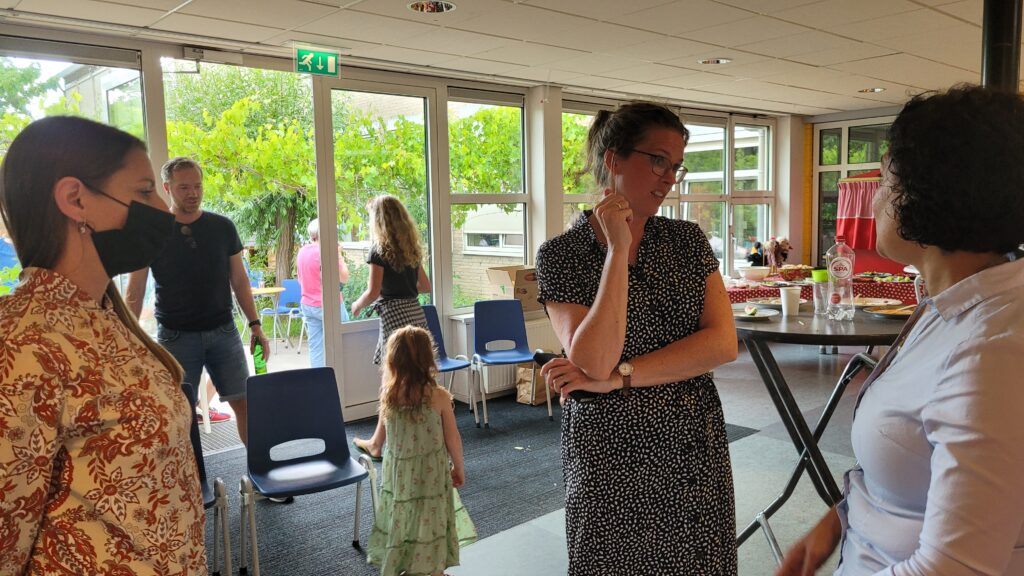
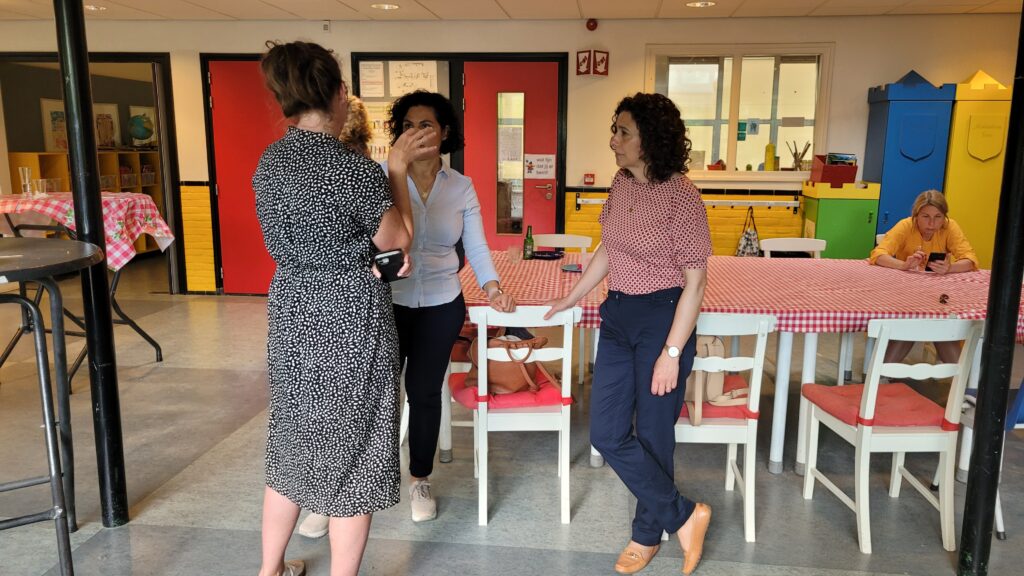
They visited two different special schools in Culemborg – Koningen Juliana Primary special school and Koningen Juliana Junior special school. They observed the students during the lessons and attended meetings with other teachers from partner schools where they shared their experiences and evaluated the project.
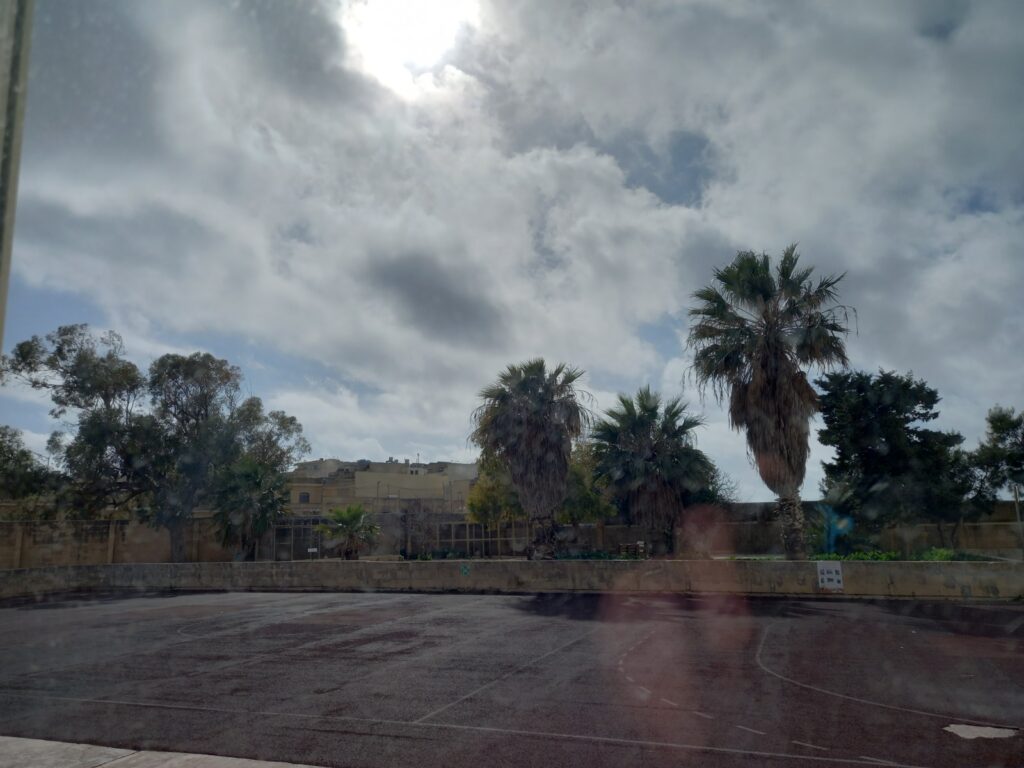
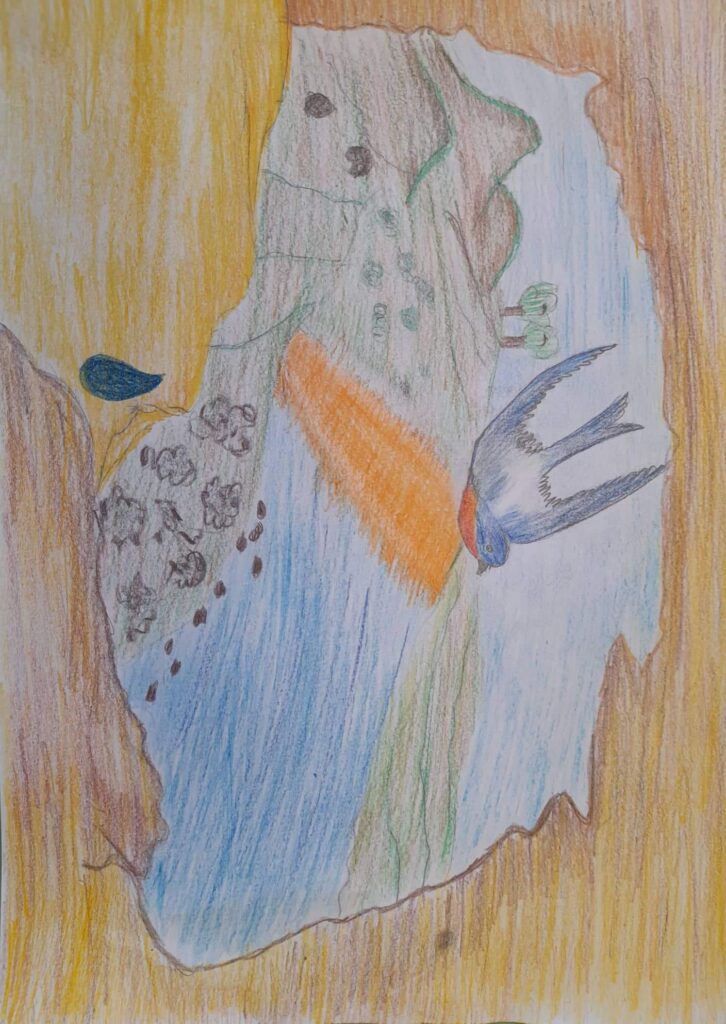
Global warming is expected to cause changes in the amount of cloud cover, and the height and thickness of these clouds in the future, shifting the balance between the parasol and blanket effects of clouds. The knock-on effect this will have on temperature is known as cloud feedback.
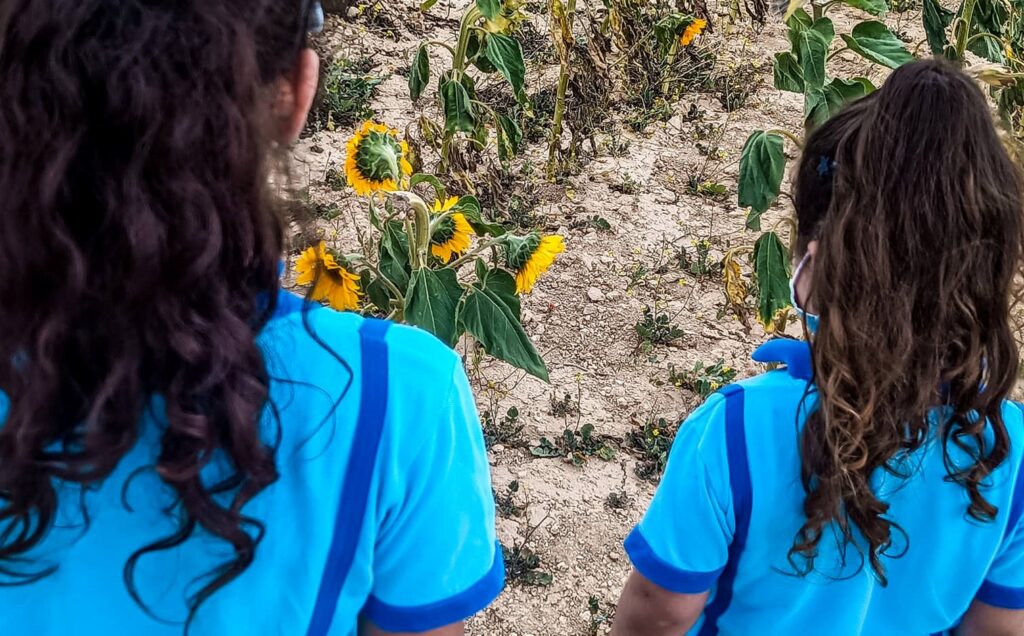
This book is being compiled by students from different countries involved in the Erasmus+ project ‘Europeans Together for Earth’. The following are the pages created by the Year 5 students at Gozo College Sannat Primary and Special Unit.
Nature Trust – FEE MaltaEkoSkola Malta have been instrumental to send 19 educators from 9 different Eco-Schools for training in Athens, Greece about Education about Marine Litter and the EU Directive on Single Use Plastics provided by MIO – ECSDE. Two educators from our school, Ms Karen Attard and Mr Christian Sacco, took part in this project.
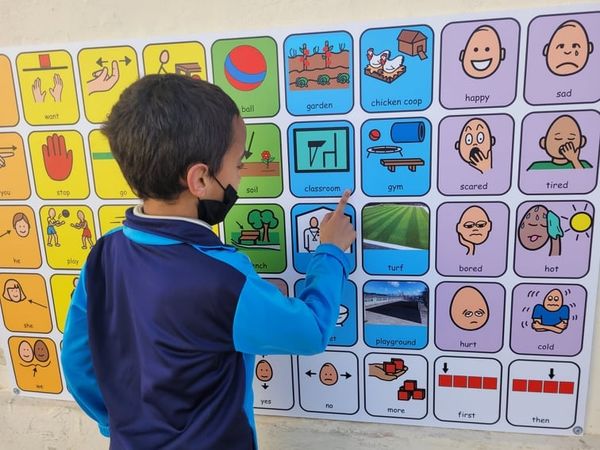
Children with autism may have difficulty developing language skills and understanding what others say to them. They also often have difficulty communicating nonverbally, such as through hand gestures, eye contact, and facial expressions. A communication board was installed in the school’s playground to help students with limited language skills to express themselves. The pictures and words on the board will enable them to make comments, requests or give instructions to each other.